Skip to content
Want to buy a refurbished Home Health Box as part of our ongoing promotion?  Fill out this form.
Comprehensive indoor air sampling
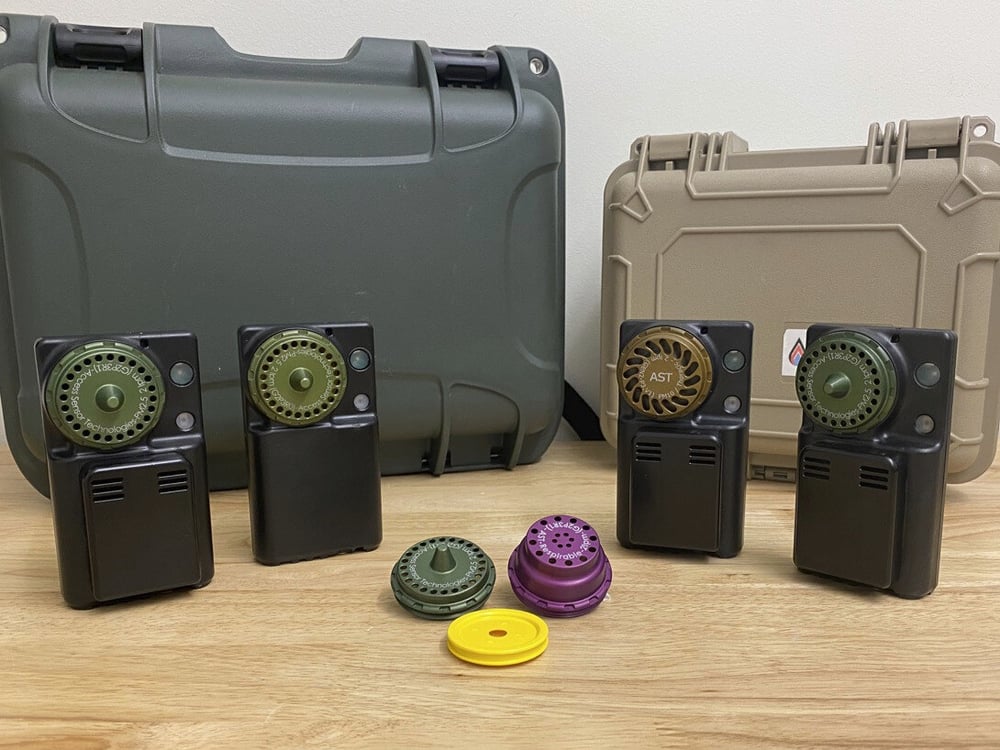
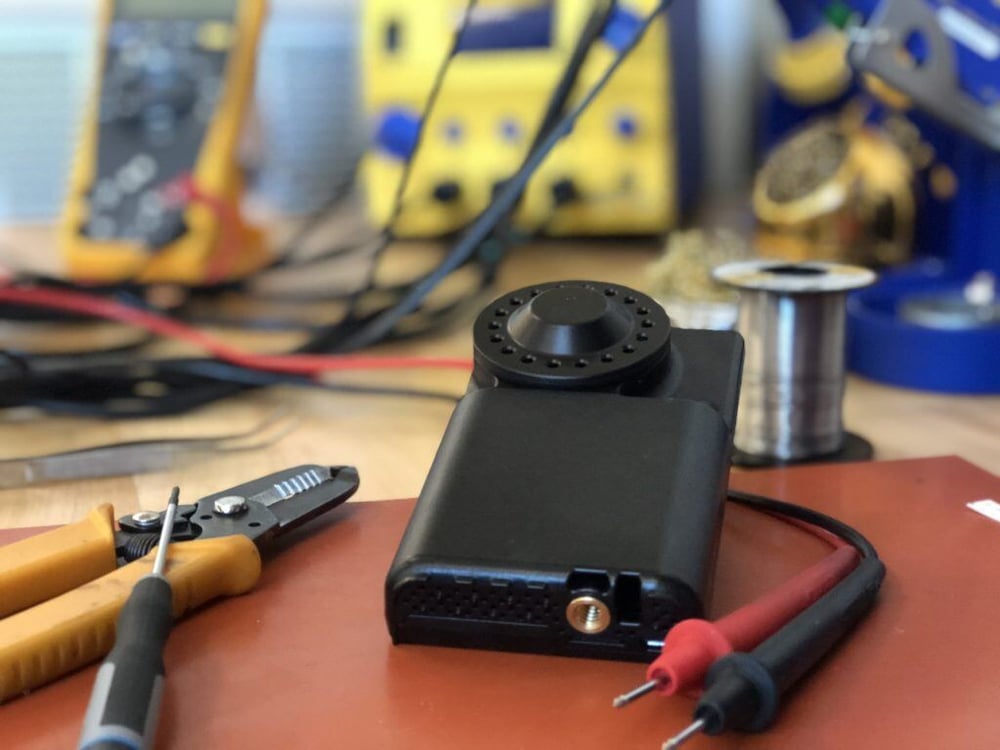
Home Health Box
Home Health Box with sorbent cover removed
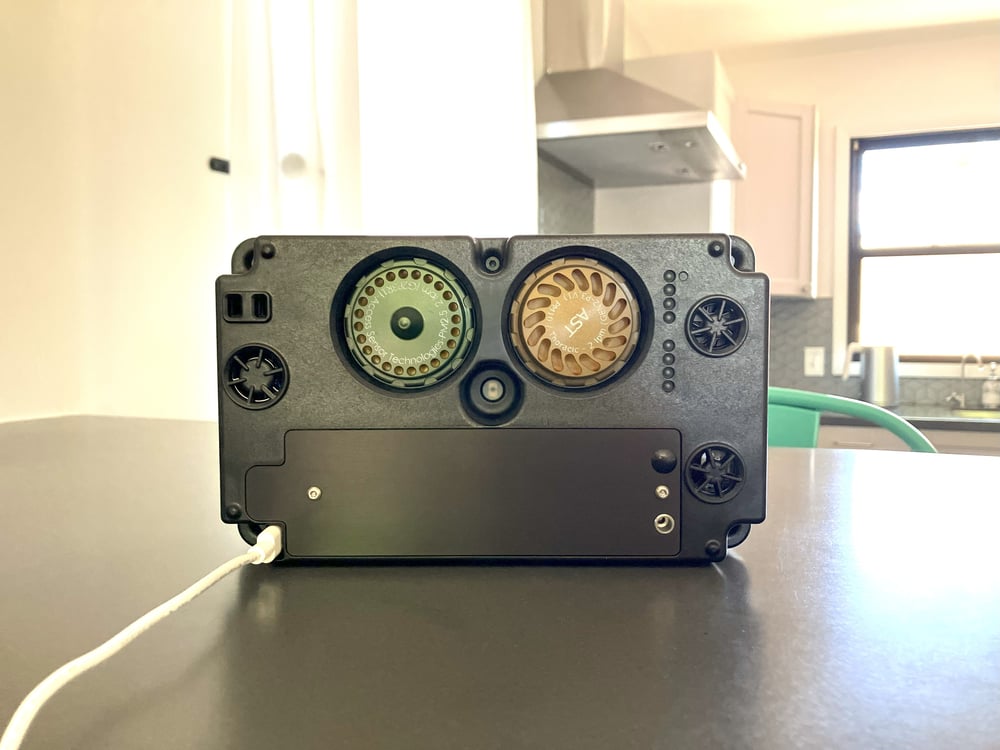
Home Health Box in kitchen

The Home Health Box (HHB) is a compact indoor air sampler and monitor. The HHB can be configured to sample and sense a range of pollutants:

  • Up to two particulate matter sampling channels
  • Up to two active gas sampling channels
  • Time-resolved particulate matter sensing
  • Time-resolved CO2 sensing
  • Time-resolved sensing of up to four additional gases (e.g., NO2, CO) using electrochemical sensors 

All samples are collected using pumps that are virtually silent, just like the pump in our Ultrasonic Personal Air Sampler (UPAS).

Configuration Options and Specifications

Particulate matter sampling channels

Quantity The baseline Home Health Box configuration includes two particulate matter sampling channels
Flow rate 1.0 or 2.0 L min-1 (depending on the size-selective inlet used) 
Flow rate accuracy ± 4% of setpoint (actively controlled) 
Available size-selective inlets PM2.5 @ 1 L min-1, PM2.5 @ 2 L min-1, Respirable PM @ 2 L min-1, PM10/Thoracic @ 2 L min-1 
Filter size 37 mm (default) or 25 mm; quick-change filter cartridges for easy in-field handling 
Maximum back pressure 7.0" H2O @ 1 L min-1, 4.5" H2O @ 2 L min-1


Gas sampling channels

Quantity The baseline Home Health Box configuration includes two gas sampling channels
Flow rate 3 to 30 mL min-1; user programmable
Flow rate accuracy ± 4% of setpoint (actively controlled) 
Compatible sorbent media ¼” OD × 3.5” long (6.35-mm OD × 89-mm long) thermal desorption tubes
Waters™ Sep-Pak® cartridges
Common glass sorbent tubes (e.g., 6 to 10-mm in diameter)
Maximum back pressure 34" H2O


Pollutant sensors

Baseline sensor package Particulate matter: Sensirion SEN55 (laser light scattering)
Carbon dioxide (CO2): Sensirion SCD30 (non-dispersive infrared; NDIR)
tVOCs and NOx (qualitative estimates): Sensirion SGP41 (MOx)
Electrochemical sensors for additional pollutants Up to four Alphasense B-4 series electrochemical sensors. These sensors are designed to measure ppb-level concentrations. NO2-B43F for nitrogen dioxide (measurement range = <1 to ~15 ppm); CO-B4 for carbon monoxide (measurement range = <1 to ~10 ppm); contact our engineering team if you'd like sensors for other pollutants added to your HHB (e.g., NO, O3).


Power

Power supply 15 W, 5 V USB Type-C®
Line power The Home Health Box can run indefinitely when plugged into a wall outlet
Battery Li-ion; 24 W-h; battery life will depend on the sample configuration, filter media, sorbent media, and local air density; 8-h runtime on battery when collecting two filter samples on MTL PTFE membrane filters at 2 L min-1 and two gas samples on Markes Carbopack X SafeLok™ thermal desorption tubes at 30 mL min-1 with PM sensor, CO2 sensor, and one Alphasense B-series electrochemical sensor running in a location with 1.0 g L-1 air density.
Charging time When the HHB is not running, the battery will charge fully in 2 h using the provided 15 W, 5 V USB Type-C wall adapter.


Size, weight, and noise

Exterior size 213 mm × 132 mm × 107 mm, excluding size-selective inlets
Weight Up to 1.5 kg; depends upon configuration and sample media installed (all sample media to be provided by the user)
Noise < 50 dB at 25 cm distance


Data logging

Memory type microSD™ card
Data logging interval 5, 15, 30, or 60 s; default = 30 s


Operating conditions

Temperature Operating = -20 to 60 °C; Charging = 0 to 45 °C; Storage = -20 to 50 °C
Relative humidity Up to 95% at 40 °C (non-condensing)
Altitude 2,500 ft (760 m) below sea level to 20,000 ft (6,100 m) above sea level; all sample flow rates will be adjusted automatically for variations in air density within this altitude range.


Sample media compatibility

Which filters can I use to sample particulate matter with the HHB?

Either 37- or 25-mm-diameter filters can be used to collect PM samples with the HHB. For samples that will undergo gravimetric, optical black carbon, and/or X-ray fluorescence (XRF) analyses, we recommend using PTFE (Teflon™) membrane filters with 2-μm pores (Measurement Technology Laboratories part number PT37P-PF03 for the 37-mm version and PT25P-PF03 for the 25-mm version). Many other filters can also be used in the HHB; however, there are some air sampling filters that are not compatible with the HHB. The filter sample pump that makes the HHB virtually silent also has a lower tolerance for “back pressure” (resistance to flow) than many of the larger, noisier pumps that have been used historically to collect indoor PM samples. In the table below, we indicate whether various filters can be used to sample PM with the HHB at flow rates of 1 and 2 L min-1. For most of the filters listed below, we provide an example part number for the 37-mm version, but performance is typically similar for 37- and 25-mm versions of the same filter.

Filter type Pore size (μm) Example product Sample flow rate
1 L min-1 2 L min-1
PTFE membrane 2.0 MTL PT37P-PF03    
PTFE membrane 1.0 Zefon FPTFE137    
PVC membrane 5.0 SKC 225-5-37    
Quartz fiber - Pall Tissuquartz 2500QAT-UP    
Glass fiber, grade A-E 1.0 Zefon IW-AE3700    
Emfab™ (borosilicate microfiber w/ woven glass, PTFE bonded) - Pall TX40HI20WW    
Gelatin 3.0 Sartorius 12602--37----ALK    
MCE 0.8 SKC 225-1939    
Polycarbonate membrane 1.2 Millipore RTTP02500    
Polycarbonate membrane 1.0 Sterlitech 1270064    
Legend:
Compatible with AST particulate matter samplers, including the PM sampling channels on the HHB
Suitable for use if required by your sampling protocol or analysis method;  pump voltage setting required to sample through clean filter is >75% of the maximum recommended value; slight concern about the voltage setting that might be required to sample through a filter that is heavily-loaded with PM
Not recommended or not compatible for use with the UPAS; pump voltage setting required to sample through clean filter is greater than the maximum recommended or maximum allowable value


Which sorbent media can I used to sample gas-phase pollutants with the HHB?

The HHB sorbent media pocket will accommodate ¼” OD × 3.5” long (6.35-mm OD × 89-mm long) stainless-steel thermal desorption tubes, Waters™ Sep-Pak® cartridges, as well as most common (e.g., 8-mm diameter) glass sorbent tubes. The gas sampling channels on the HHB have much higher tolerances for back pressure than the PM sampling channels.

Technical Resources

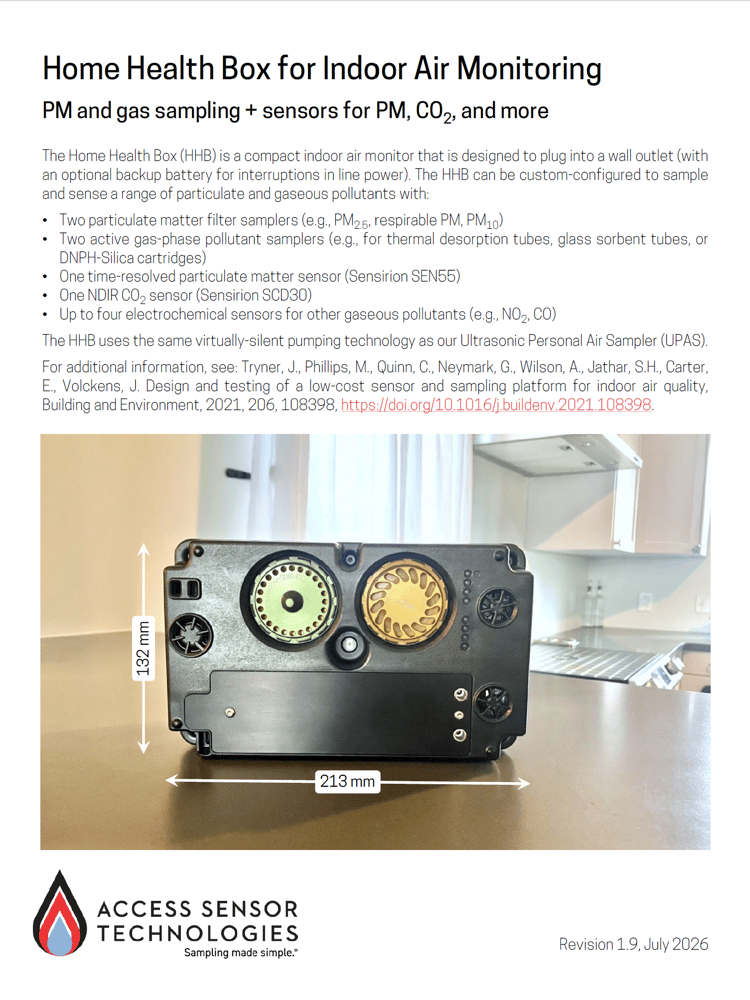
Screenshot of page 1 of Home Health Box Product Information Sheet

Product Information Sheet

HHB capabilities and specifications, revision 1.9, released July 2026

Download PDF

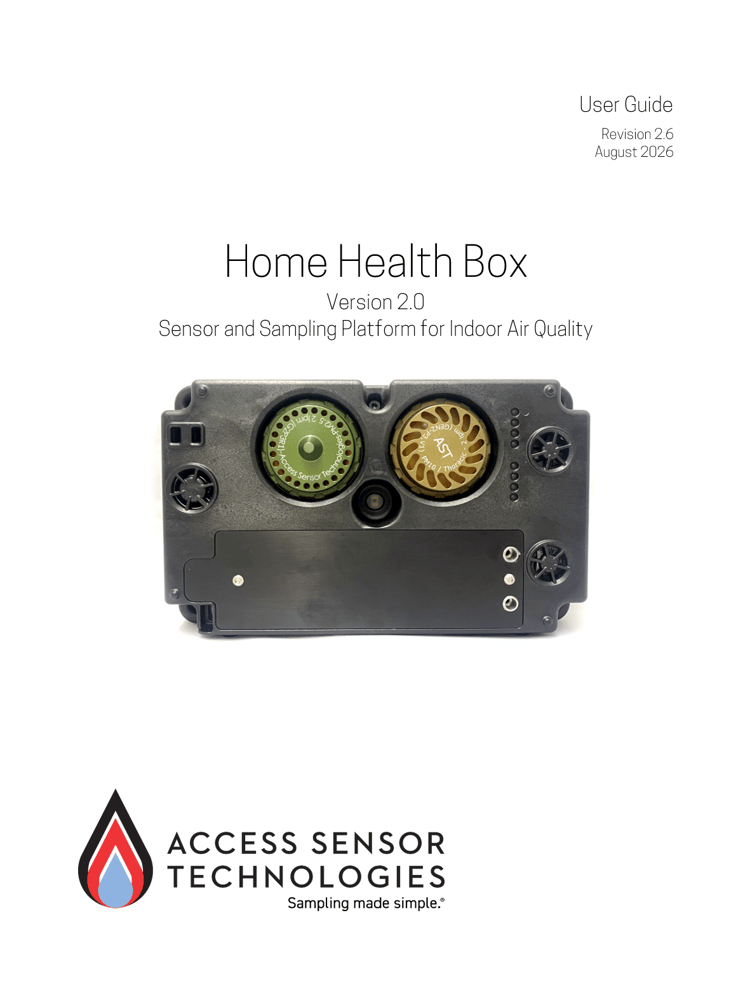
Screenshot of Home Health Box User Guide cover page

User Guide

Home Health Box User Guide, revision 2.5, released June 2026

Download PDF

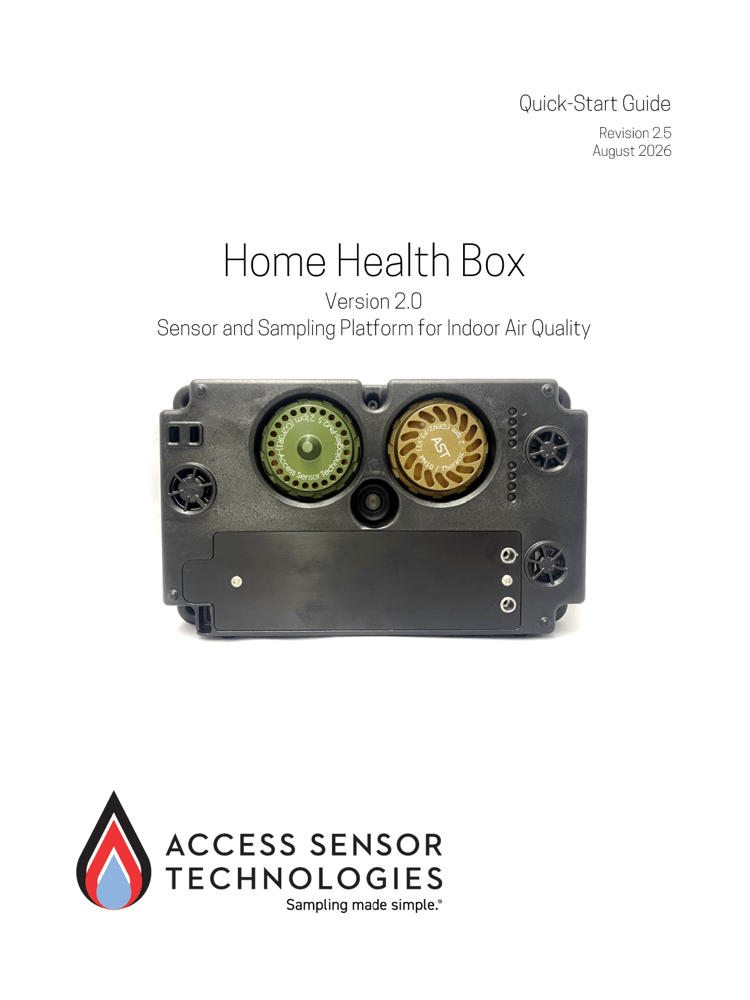
Screenshot of Home Health Box Quick-Start Guide cover page

Quick-Start Guide

A shorter version of the HHB User Guide, revision 2.4, released June 2026

Download PDF

File icon

Firmware

Latest version released 29 May 2025

Download .bin file

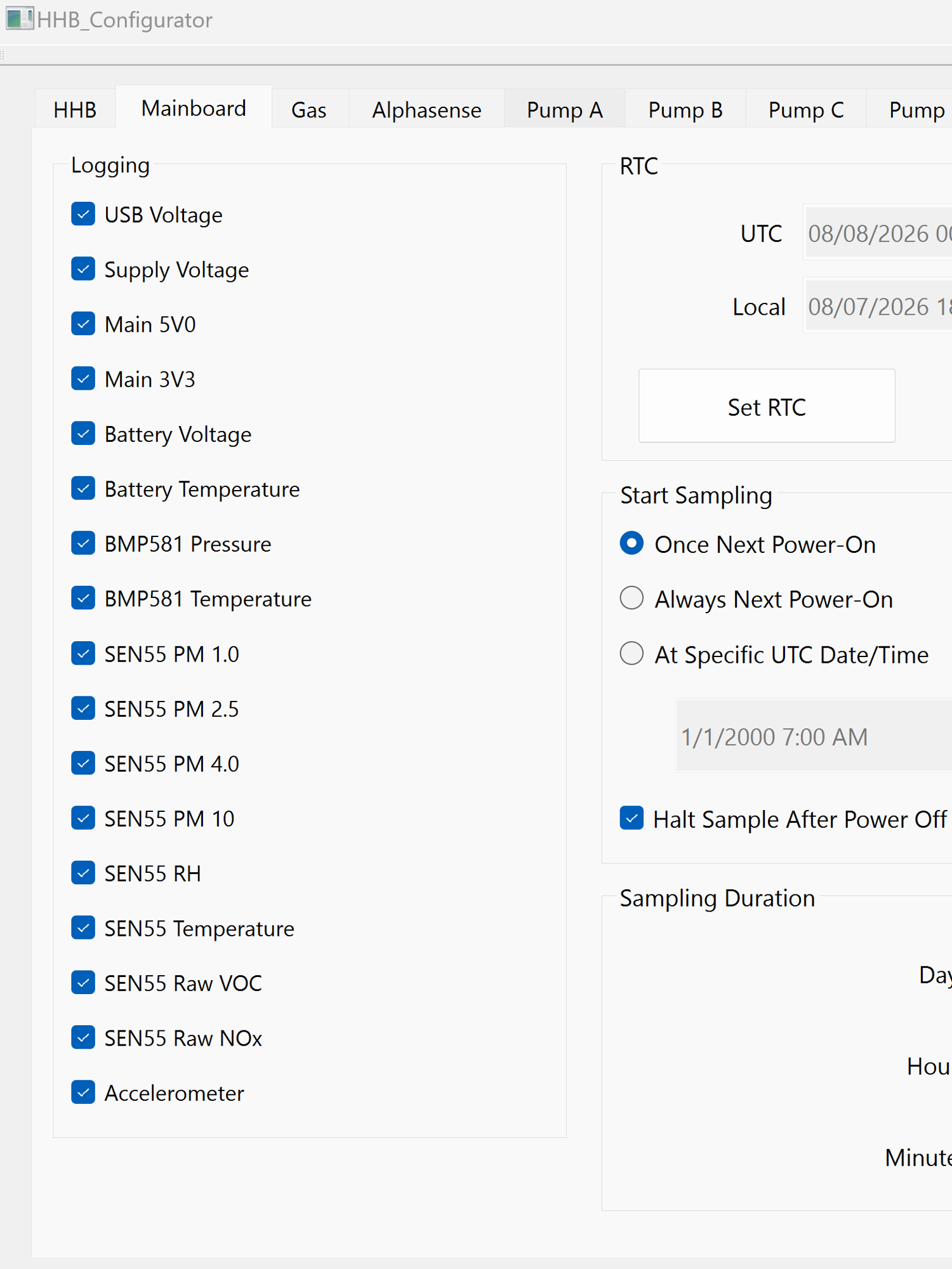
Screenshot of Home Health Box Configurator software

Desktop software

For programming HHB sample settings

Download .zip folder

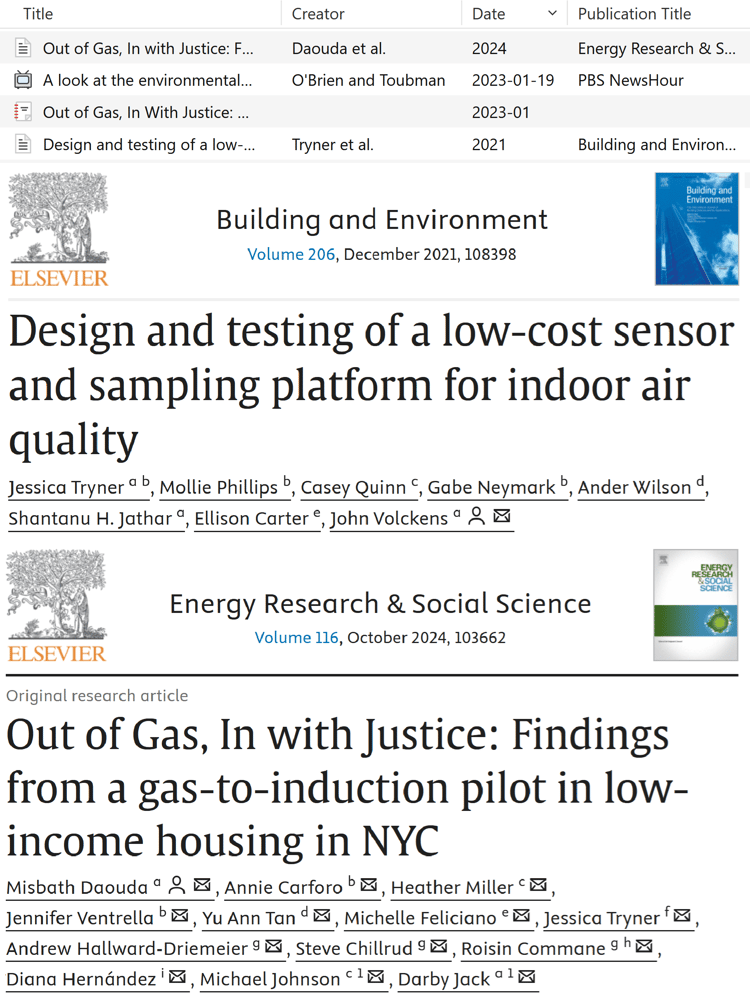
Screenshots from public Home Health Box Zotero library

Zotero Library

Publications that feature the HHB

Link to public Zotero library

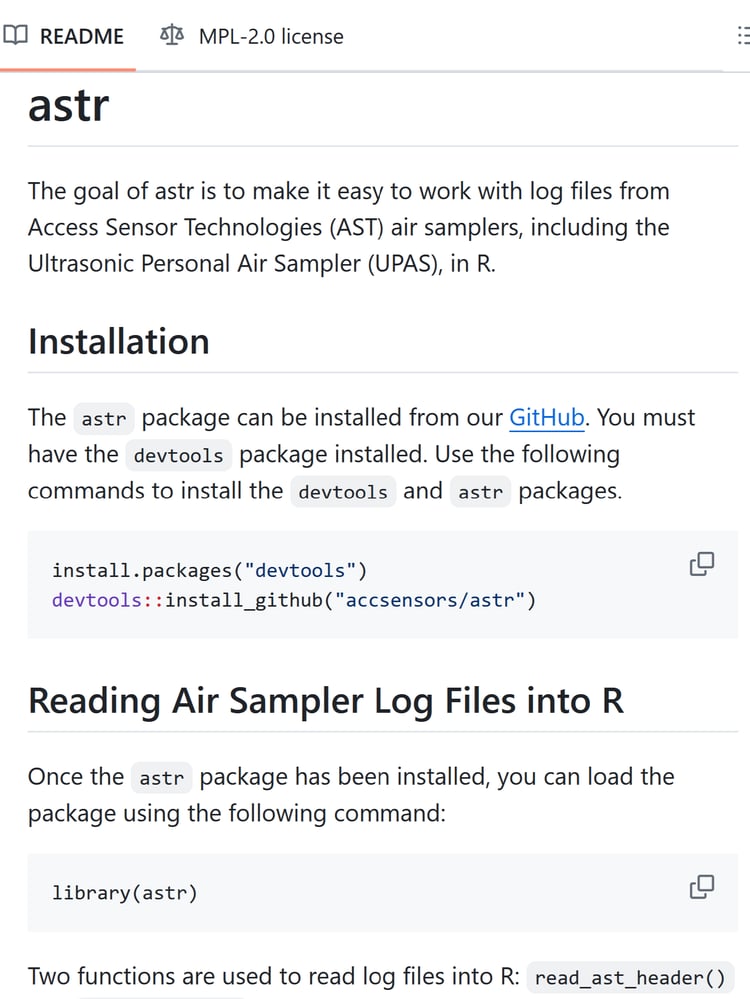
Screenshot of readme for astr package

astr package

R package for working with HHB log files

Link to GitHub

Related Blog Posts

Frequently-Asked Questions

  • Can I use my UPAS inlets with the HHB?

    Yes, we've engineered the Home Health Box to be part of the family. Use the same GEN2 size-selective particulate matter inlets, filter cartridges, inlet tools, and flow-check adapters that you use with personal samplers you've purchased from us.

  • How do I program the HHB? 

    Program the HHB using our desktop software for Windows PCs. The software allows for custom control over all sample settings, allowing you flexibility in campaign design and ensuring you get the data you want.

  • How do I power the HHB?

    The HHB is designed to be plugged into a wall outlet using a common USB-C adapter (included). It also includes a backup battery so that the HHB can continue sampling during short-duration power loss.

  • How long does it take to set up?

    It's easy to install sample media and program the sample settings before visiting the indoor environment to be monitored. Once you're on site, the HHB can be plugged in and powered on in less than a minute.

  • Can I ship the HHB to the monitoring site to save time and money?

    Sure! We've used the Home Health Box in a mail-away model ourselves. If someone at the location to be monitored can plug the HHB in and press the power button, they can start the sample without you.

  • How are sample data logged?

    All sample data are logged to a microSD card inside the Home Health Box. Sample log files are written in .csv format. These files can be read into the R programming environment using our astr package.

Photograph of UPAS and accessories with shipping cases

Request a free product demonstration

We can send you a Home Health Box to try for a few weeks before you buy. This demonstration is free as long as the product is returned at the end of the demonstration period. No purchase is required.  Fill out and submit this form to request a demonstration unit.
A photograph of a Home Health Box in a kitchen

Request a quote

Fill out and submit this form to request a quote. It's okay if you still have questions and aren't sure which products or product configurations you need. You can enter your questions on the form and we'll get back to you.
Photograph of UPAS v2.0 at workbench

Request service

Want to send your Home Health Box back for routine recalibration? Worried there might be something wrong with your Home Health Box?  Have a technical question?  Fill out and submit this service request form.